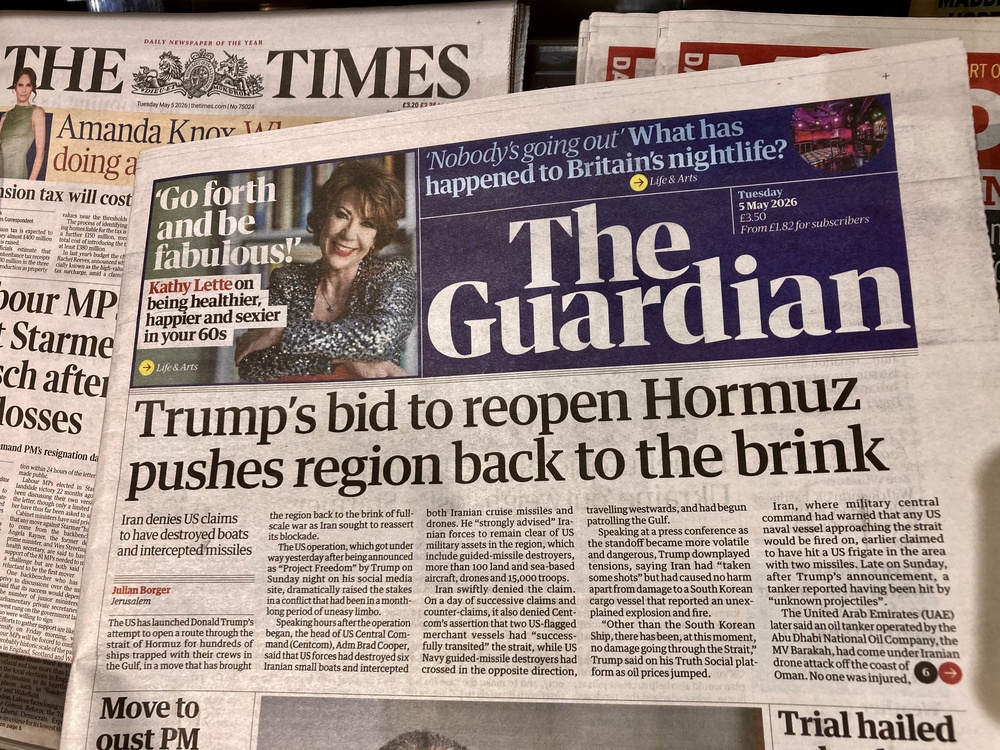
The Negotiations Sound Close, But the Real Terms Are Still Difficult
The latest messaging from Washington has become more confident, but confidence is not the same as closure. Trump said the two sides were getting a lot closer and described the framework as largely negotiated. A few days earlier, he had framed the choice even more bluntly, saying, "We're in the final stages regarding Iran. We'll see how it unfolds. We can either strike a deal or take actions that might be quite severe." Marco Rubio added another layer of urgency when he said it could take a few days to negotiate a deal to halt the conflict. That language suggests progress, but it also confirms that the negotiation remains live and unstable. The package under discussion is not small. It involves a ceasefire structure, the reopening of Hormuz, sanctions relief in some form, treatment of Iran’s enriched uranium stockpile, and a broader second phase of talks. Another reported outline points to a roughly 30-day timeline for restoring transit through Hormuz after a ceasefire, including mine clearance and protocols for safe navigation. That means even in the best case, markets would still need to see whether the sequencing works in practice and whether political promises become operational commitments.
Hormuz Is Still the Market’s Main Reality Check
The Strait of Hormuz remains the clearest test of whether diplomacy is changing anything real. It is not enough for negotiators to say they are making progress. The market wants to see ships moving. Around mid-May, only about 30 vessels had passed through Hormuz from Wednesday up to the time of reporting, versus roughly 140 ships per day before the war in Iran and the closure of the route in late February. Earlier in the crisis, traffic had fallen much further, at one point to only seven ships in 24 hours and later to only six, showing how severe the disruption had become. Then, there have been small signs of relief. Two Chinese supertankers carrying around 4 million barrels of crude managed to exit the strait, and one reported outline suggested that Iran may allow safe passage without charging transit fees, while still charging for navigation and environmental services under a protocol with Oman. Even so, this is still not normal traffic. Before the conflict, Hormuz handled about one-fifth of global oil and liquefied natural gas flows. When a route of that importance remains restricted, the market cannot price peace. It can only price temporary access.
Oil Prices Are Softening, But the Macro Risk Has Not Gone Away
The most current pricing tells a more subtle story than the peak panic phase earlier in the month. Brent was around $97.19 on May 27, while WTI had previously been trading near the low $90s after optimism over a possible U.S. Iran deal briefly pulled prices lower. That is below the $105 to $107 range seen during the sharper phase of supply fears, but it does not mean the oil story is over.* It means the market is now trying to decide whether the premium should fade further or return. The broader macro effect is already visible. On May 19, the U.S. 10‑year Treasury yield pushed as high as 4.687%, while the 30‑year briefly touched 5.197%, both the highest levels since before the 2008 financial crisis, before easing back in the following sessions. The 2‑year yield climbed above 4.1% around the same time, underlining that markets are still pricing a clearly higher‑for‑longer rate environment rather than a quick return to the ultra‑low yields of previous years.* Those are not small moves. They show how quickly energy stress can feed into inflation expectations and then into the pricing of financial conditions. If oil stays closer to $100 than to the low $70s seen earlier this year, central banks will have less room to ease, transport and input costs will remain elevated, and economies dependent on imported energy will stay exposed to another layer of inflation pressure.* [1]
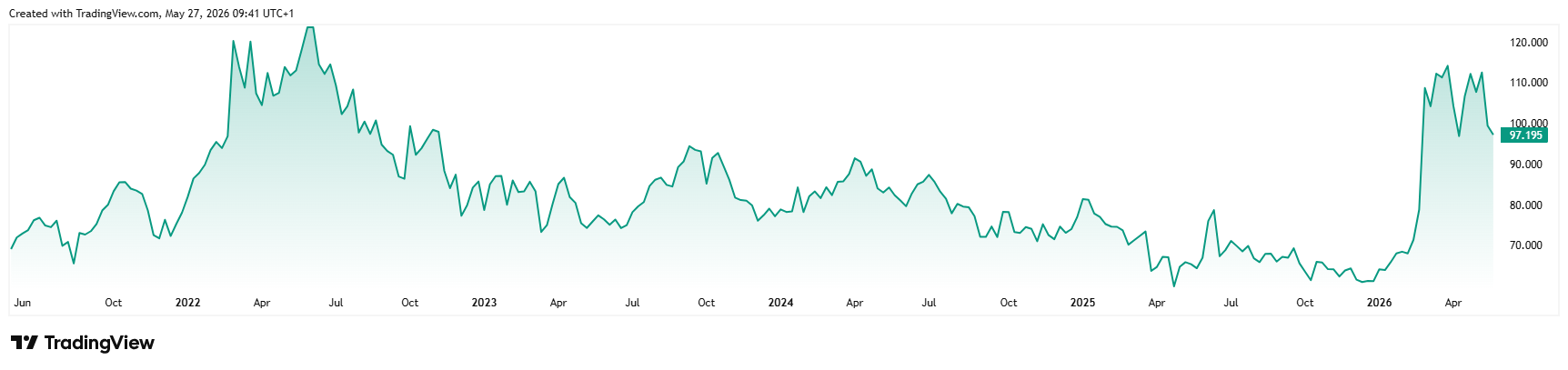
Brent Crude Oil Price performance over the past five years*
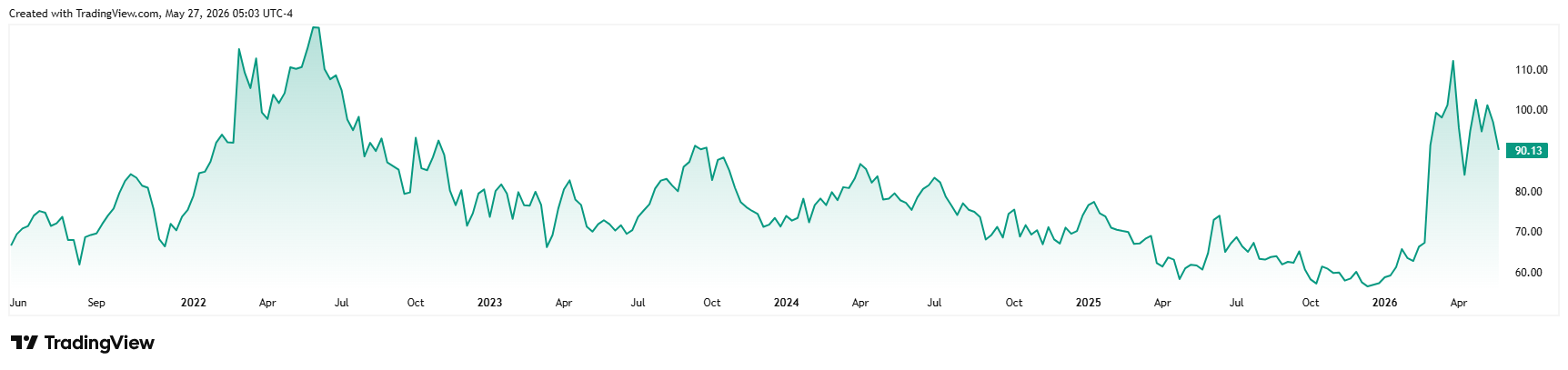
WTI Crude Oil Price performance over the past five years*
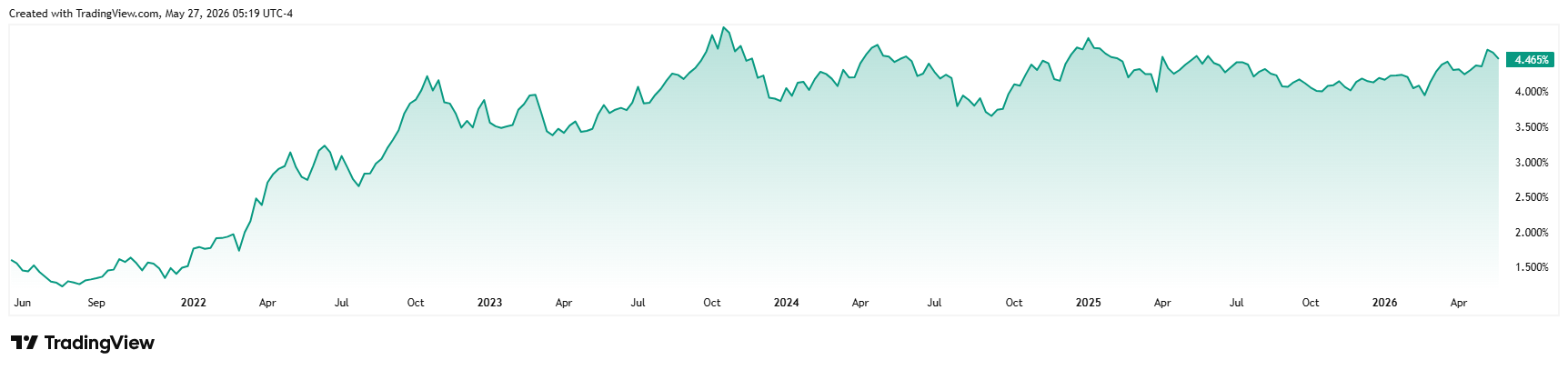
U.S. 10‑Year Treasury Yield performance over the past five years*
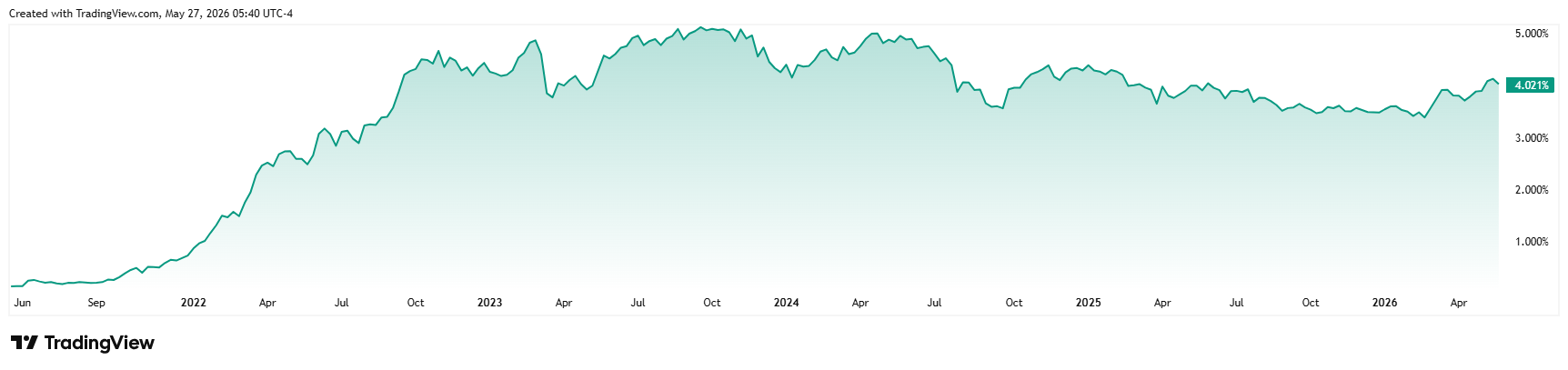
U.S. 2‑Year Treasury Yield performance over the past five years*
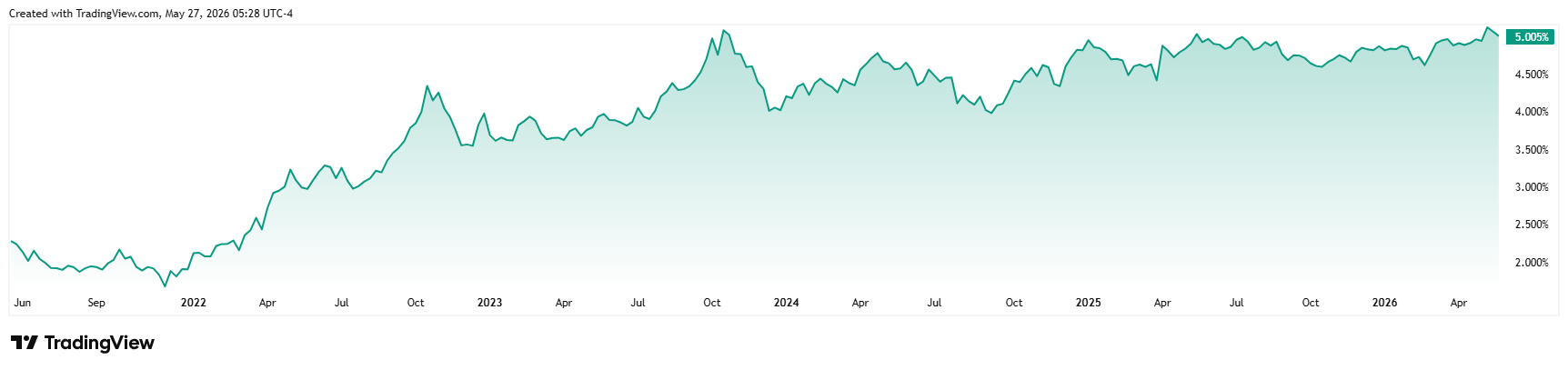
U.S. 30‑Year Treasury Yield performance over the past five years*
The Next Few Days Matter More Than the Last Few Weeks
The next move in markets will hinge less on what has already been promised and more on whether this diplomatic channel can deliver something that lasts. Trump has told his team there is "no rush" on an agreement, while Marco Rubio now talks about a process that could "take a few days," and Iranian officials still warn against expecting any quick breakthrough. That combination leaves investors exactly where they dislike being the most, between a negotiation that is clearly advancing and a conflict that can still turn violent overnight. Fresh U.S. strikes reported on May 25 and Iran’s accusation that Washington violated the ceasefire show that the story is still running on two tracks at once, one called diplomacy and one called force. If the talks result in a framework that restores confidence in shipping through Hormuz over the next 30 days, oil can shed more of its geopolitical premium, and the inflation pulse can finally start to weaken. If that framework does not materialize, the latest pullback in crude is more likely a pause than a trend, and the global economy will stay exposed to a mix of higher energy costs, tighter financial conditions, and poorer visibility on growth. At this point, the important signal is no longer the language around the deal. It is whether that deal changes flows, prices, and expectations in the real world. [2]
* Past performance is no guarantee of future results
[1,2] Forward-looking statements are based on assumptions and current expectations, which may be inaccurate, or based on the current economic environment which is subject to change. Such statements are not guaranteeing of future performance. They involve risks and other uncertainties which are difficult to predict. Results could differ materially from those expressed or implied in any forward-looking statements.
Sources:
https://www.reuters.com/business/energy/oil-edges-up-ahead-trump-xi-meeting-beijing-2026-05-14/
https://www.tradingview.com/symbols/BRENT/?exchange=VELOCITY&timeframe=60M
https://www.tradingview.com/symbols/USOIL/?exchange=TVC&timeframe=60M
https://www.tradingview.com/symbols/TVC-US10Y/?timeframe=60M
https://www.tradingview.com/symbols/TVC-US02Y/?timeframe=60M
https://www.tradingview.com/symbols/TVC-US30Y/?timeframe=60M