Blog

Blog

Energy Independence: The Future of AI

share

fb-icon tweet-icon
Apme Fx | Energy Independence: The Future of AI

Artificial intelligence is changing the world, yet its biggest enemy is neither regulation nor a shortage of chips, but paradoxically energy intensity. The massive expansion of AI data centers is hitting the limits of overloaded energy grids, creating an unprecedented investment opportunity in a field that until now was dominated only by energy giants.[1] Europe has just taken a historic step in Dublin, where the first data center operating on a completely independent microgrid has been built. This €1 billion project is not just a technological novelty, but a clear signal that whoever wants to control the digital future must first control their own energy.


The End of Dependence on the State Grid


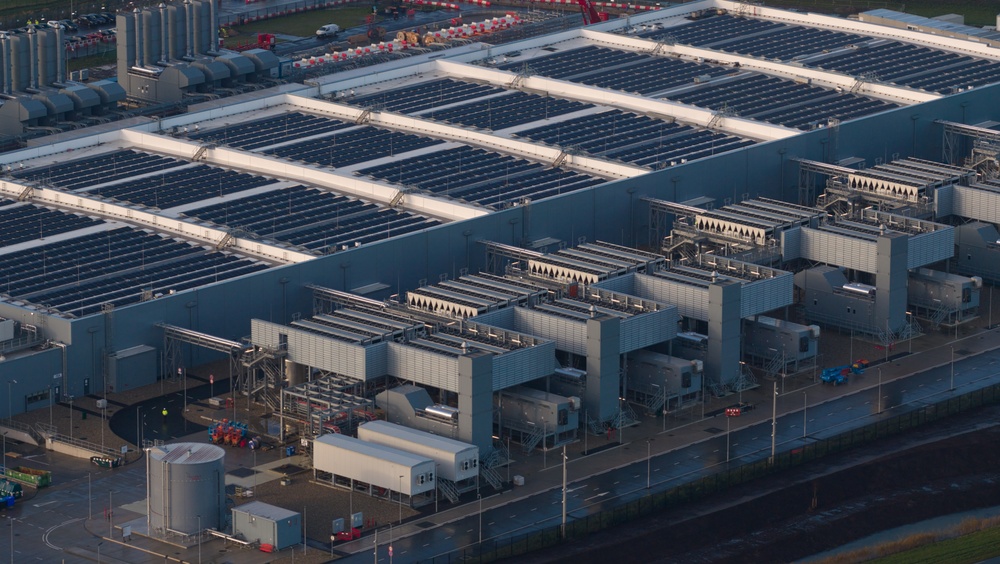
The project of companies AVK and Pure Data Centre Group in Ireland operates as a so-called “island system.” While ordinary buildings depend on the stability and capacity of the public grid, this 110 MW facility produces, stores, and distributes electricity on its own. In a country where data centers consume more than a fifth of the national electricity and the government has had to introduce strict moratoriums, energy autonomy is the only path forward. For investors, this represents a revolutionary change. Data centers are no longer asking the state for permission and instead are becoming independent energy nodes. It is no surprise that this trend already dominates in the United States, where nearly one third of centers have their own grid, while Europe is now setting out on the same path with an expected annual growth of 10%.


A New Era of Infrastructure Funds


The opportunity has long exceeded just the technology companies themselves. A new type of investor is emerging in the market – infrastructure funds that specialize in building and operating these energy systems as turnkey solutions. The global value of this market already exceeds $29 billion, and with increasing pressure on ecology, space is opening for a transition from gas engines to biomethane or hydrogen. Companies such as Schneider Electric, Siemens, and ABB, which supply the necessary technologies, are therefore becoming indispensable pillars of the AI revolution without which the servers would simply go dark.


Political Context


Energy self-sufficiency is also becoming a political priority. Statements from world leaders, including Donald Trump, clearly indicate that technology corporations will no longer be able to operate on state infrastructures and will have to secure their own energy sources. The European Commission estimates that €1.2 trillion will be needed by 2040 just to modernize the energy sector. For an attentive investor, this means the following: the biggest profits from artificial intelligence may not come from software, but from the infrastructure that keeps it alive. The microgrid market is just entering its maturity phase, and those who capture this trend today will likely benefit over the next five years from the transformation of data centers into the modern “power plants” of the digital age.


[1] Forward-looking statements are based on assumptions and current expectations that may be inaccurate, or on the current economic environment, which may change. Such statements are not a guarantee of future performance. They involve risks and other uncertainties that are difficult to predict. Results may differ materially from those expressed or implied in any forward-looking statements.


Sources:


https://www.cnbc.com/2026/03/11/data-center-microgrid-power-ireland-ai-boom-avk-pure-dc.html

https://energy.ec.europa.eu/document/download/33b1d500-3af5-4add-9ed8-4111a52b9e05_en?filename=COM_2025_1006_1_EN_ACT_part1_v7.pdf

https://www.cso.ie/en/releasesandpublications/ep/p-dcmec/datacentresmeteredelectricityconsumption2024/

Disclaimer:

The material herein is considered as marketing communication under the relevant laws and regulations, and as such is not a subject to any prohibition on dealing ahead of the dissemination of investment research. It has not been prepared in accordance with legal requirements designed to promote the independence of investment research and should not be construed as containing investment advice, or an investment recommendation, or an offer of or solicitation for any transactions in financial instruments. The published content is intended for educational/informational purposes only. It does not take into account readers’ financial situation, personal experience or investment objectives. APME FX Trading Europe Ltd makes no representation that the information provided is accurate, current or complete; and therefore, assumes no liability for any losses arising from investments based on the supplied content. The past performance is not a guarantee of future results.

Blog

Inflation Is Back, Powell Is Out, and Markets Have No Clear Answer

The timing could not have been more pointed. On Tuesday, May 12, the U.S. Bureau of Labor Statistics published April's inflation figures, and the...

Blog

Fed at a Crossroads

There was a time when the Federal Reserve's job, while never easy, followed a recognizable script. Inflation rises, the Fed tightens. Inflation f...

Blog

UAE Walks Away from OPEC: The End of an Era for Global Oil

For nearly sixty years, the United Arab Emirates stood at the center of the world’s most influential oil alliance. That era now comes to a...

CFDs are complex instruments and carry a high risk of losing money quickly due to leverage, 81.54% of retail investors' accounts are lost when trading CFDs with this provider. You should consider whether you understand how CFDs work and whether you can afford to take the high risk of losing money. Please read the Risk Warning.