Beijing Was Never Only About Trade
The summit was always more than a trade negotiation. Iran, Taiwan, AI, nuclear weapons, and commerce were all on the table simultaneously, making it the first meeting of this scale in more than six months. Xi set the tone early, warning that any mismanagement of the Taiwan question could put the US-China relationship in great jeopardy. Beijing used the summit to push its own framework: a three-year strategic stability agreement that, from China's perspective, anchors the relationship with Washington without surrendering any concrete leverage. Analyst Jack Lee from China Macro Group described it as Beijing's attempt to use Trump's willingness to engage transactionally to build a long-term framework for the entire US-China relationship, including future administrations. That is not a trade deal. That is a different game entirely.
Hormuz Became the Real Market Story
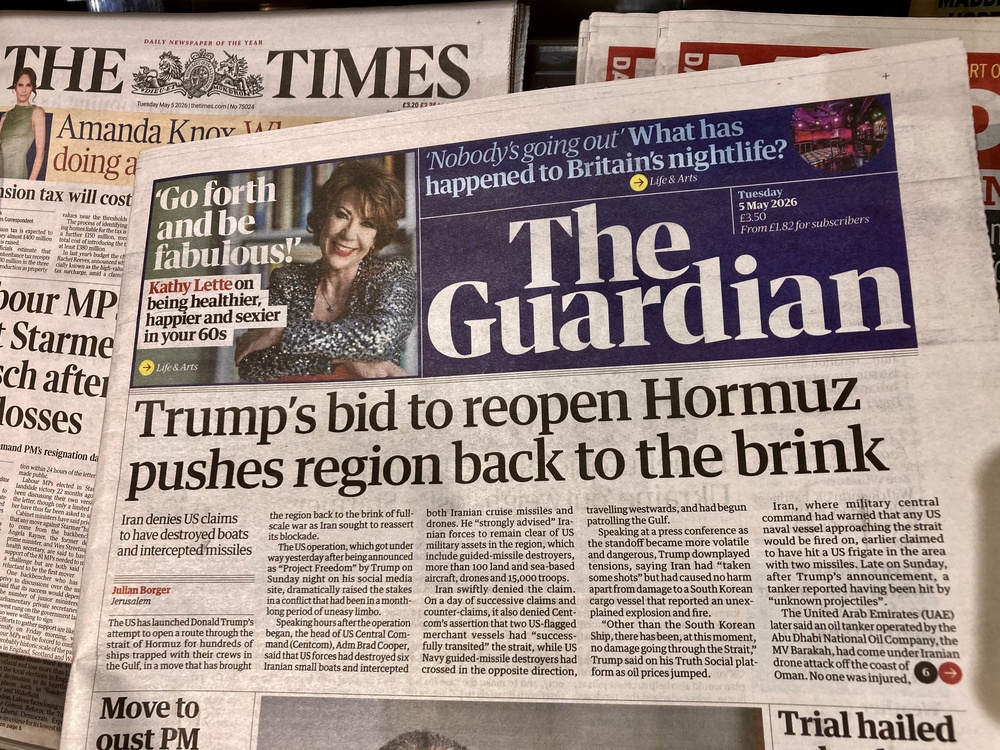
The most important market signal from the summit did not come from the press conference. It came from the oil market. Brent rose more than 2% on Friday to $108.25 per barrel after Trump told Fox News that he was losing patience with Iran and that he planned to do much more.* At the same time, Trump said during the summit that he never directly asked Xi to pressure Iran on Hormuz, because, in his own words, he does not need favors. The strait, through which roughly one-fifth of global crude exports pass, has been effectively closed since the US-Israel conflict with Iran began in February. During the summit, a Chinese tanker crossed the waterway under special conditions that Iran had negotiated for certain vessels. That is not a normalization of traffic. That is one tanker.
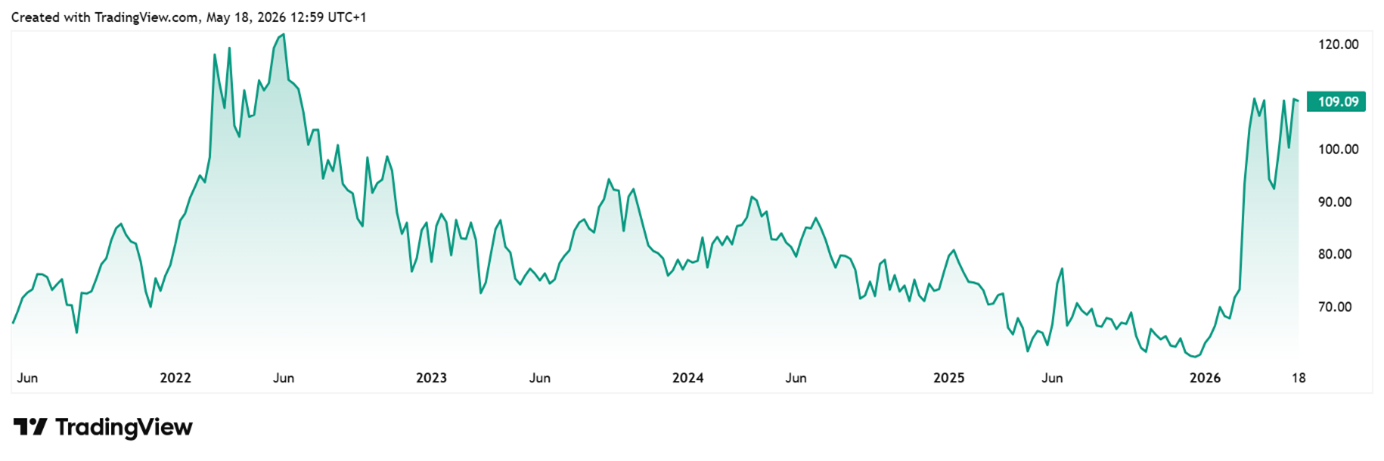
Brent Crude Oil Price performance over the past five years*
The Gap Between Announcements and Deliverables Is Still Wide
The Chinese side described the arrangements discussed during Trump's visit on tariffs, agriculture, and aircraft as preliminary, with details to be finalized through newly established trade boards. The summit outcome was meagre, amounting to a stabilization of relations and an effort to prevent further escalation rather than any breakthrough. China purchased more than 90% of Iran's oil exports in 2024, and a large share of its broader crude imports also passes through Hormuz. That means Beijing has its own economic interest in keeping the strait open, not just a diplomatic one. But it also means China is not willing to damage its relationship with Tehran simply to do Washington a favor.
What Investors Should Watch Next
The next phase is not about the summit itself, but about whether this political channel produces real changes in energy security and trade implementation. If Washington and Beijing can use the current dialogue to lower pressure around Iran and improve confidence in shipping through Hormuz, oil could lose part of its geopolitical premium, which would matter directly for inflation expectations and indirectly for central bank thinking, bond yields, and the path of the US dollar against commodity-linked currencies. If that does not happen, the same three risks will stay tightly connected. Strategic friction between the United States and China, instability in the Middle East, and a market that still responds sharply to every update on one of the world’s most important energy chokepoints. That is the real significance of Beijing. The summit did not need to produce a historic trade agreement to matter, because its biggest consequence may be that it refocused investors on the one issue that can move multiple asset classes at once, oil supply risk.
* Past performance is no guarantee of future results
Sources:
https://www.cnbc.com/2026/05/15/oil-prices-china-us-iran-strait-of-hormuz-middle-east.html
https://www.nytimes.com/2026/05/15/business/oil-stocks-gas-trump-iran.html
https://www.dw.com/en/us-china-summit-exposes-trumps-limits-on-iran-war-taiwan/a-77171942