From Product Showcase to Business Strategy
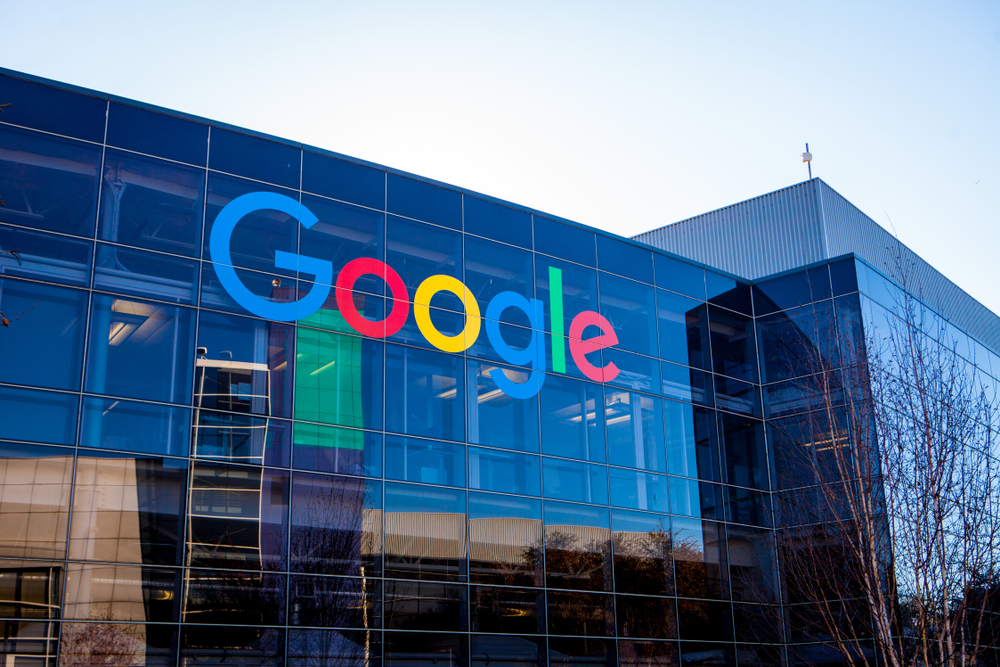
Google is no longer presenting artificial intelligence as a distant vision for the enterprise market. It is positioning AI agents as practical software tools that can handle coding, automate internal processes, support knowledge work, and improve execution across large organizations. This changes the investment narrative in a meaningful way. The market is beginning to focus less on raw model performance and more on how AI can be embedded into products that enterprises use every day. In that environment, companies with the strongest distribution, cloud infrastructure, and software ecosystem may have a clear advantage, and Google is trying to prove that it belongs in that group.
The Importance of Enterprise Spending
The real significance of this strategy lies in where the money is. Consumer AI may attract attention, but enterprise budgets are larger, stickier, and more important for long term profitability. When a company such as Google pushes AI agents into the enterprise segment, it is targeting a part of the market where adoption can translate into multi-year contracts, deeper customer relationships, and broader use of cloud services. This is why the topic matters far beyond one conference. It points to a future in which AI is sold not only as a model or an assistant, but as a layer integrated across the full technology stack of a large business.
Merck Shows the Commercial Direction
The clearest proof that Google wants to turn this strategy into revenue is its partnership with Merck. The agreement, valued at up to $1 billion over multiple years, is designed to expand AI use across research and development, manufacturing, commercial operations, and corporate functions. This is not a narrow pilot project. It is a broad enterprise deployment plan that shows how Google wants AI agents to move into high value business areas where productivity, efficiency, and decision making have direct financial consequences. For the market, this is exactly the kind of development that gives credibility to the idea that AI can become a durable source of software and cloud income.
The Next Stage of the AI Race
This moment says a great deal about the broader direction of the industry. The first phase of the AI boom was driven by infrastructure, semiconductors, and data center investment. The next phase is likely to be shaped by adoption, monetization, and the ability of technology companies to turn AI into tools that businesses rely on every day. Google is making it clear that it wants to compete on that terrain. If corporate clients begin to deploy AI agents at scale, the winners in artificial intelligence may no longer be judged only by technical leadership, but by who can convert innovation into enterprise revenue most effectively.
Sources:
https://www.reuters.com/legal/litigation/merck-partner-with-google-cloud-ai-initiatives-2026-04-22/